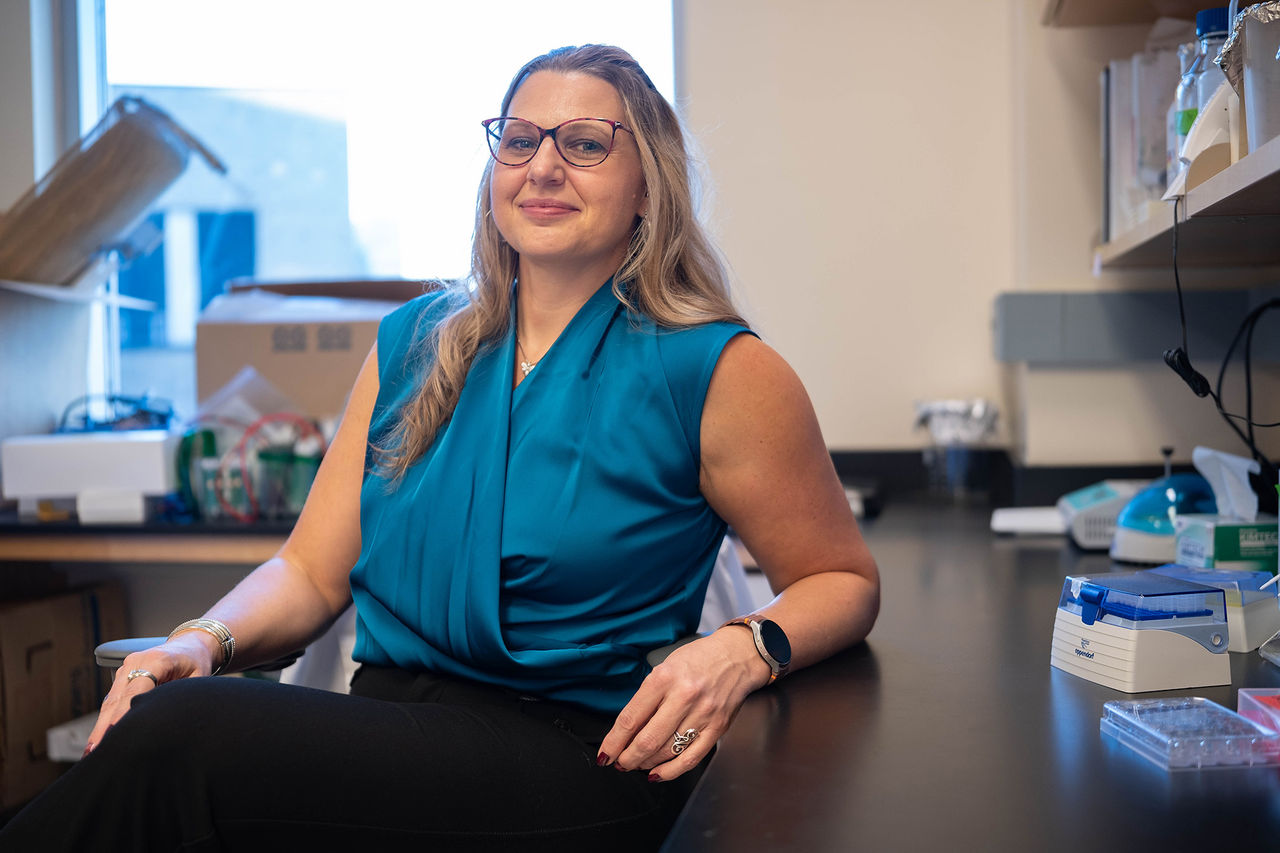
In 2011, Candi came to Cincinnati Children's Hospital for postdoctoral research in epilepsy and brain injury. She advanced to a faculty position in 2017, and in 2021, she joined the Neuroscience Graduate Program faculty at the University of Cincinnati College of Medicine.
As principal investigator of an independent lab at Cincinnati Children's Hospital, Candi leads technicians and students in epilepsy research. Initially, what sparked her unexpected pathway to law was a question: how might science better bring innovative solutions directly to patients whose seizures don't respond to traditional medications?
“One-third of our patient population does not have relief from their seizures. How can we do better?” she asked. “We're at a time in science where we’re ripe for innovation, it just needs to be fostered.”
Part of the solution was intellectual property protection. Without it, cutting-edge technologies can remain stuck in the lab, unable to reach the people they’re meant to help. But with little or no legal training, she and other scientists often unknowingly compromise their IP through collaboration—sharing research over lunch at conferences, presenting findings to small audiences, and welcoming feedback.
“Public disclosures are happening everywhere,” she lamented.
Increasingly aware of this dilemma and unable to fully unravel it on her own, Candi became engulfed with the desire to learn everything she could about IP law and bring it back to her fellow scientists.
“So much of what we do in science overlaps with intellectual property law,” she said. “It's essential for us [scientists] to understand how everything works in the legal space.”
So, she started where most people would: Google.